Graduation is an important milestone, but earning a degree alone does not guarantee career success. Today's employers look for candidates who possess academic knowledge as well as strong interpersonal and professional abilities. Skills such as communication, teamwork, leadership and problem-solving help students perform better in interviews, workplaces and everyday situations.
Many students focus heavily on examinations and academic results but overlook the importance of developing soft skills. These abilities help you express ideas confidently, handle challenges and build meaningful professional relationships.
At GlenEagles School For English, learners are encouraged to improve their communication abilities and personal development through practical learning. Developing the right soft skills before graduation can make the transition from college life to professional life much smoother.
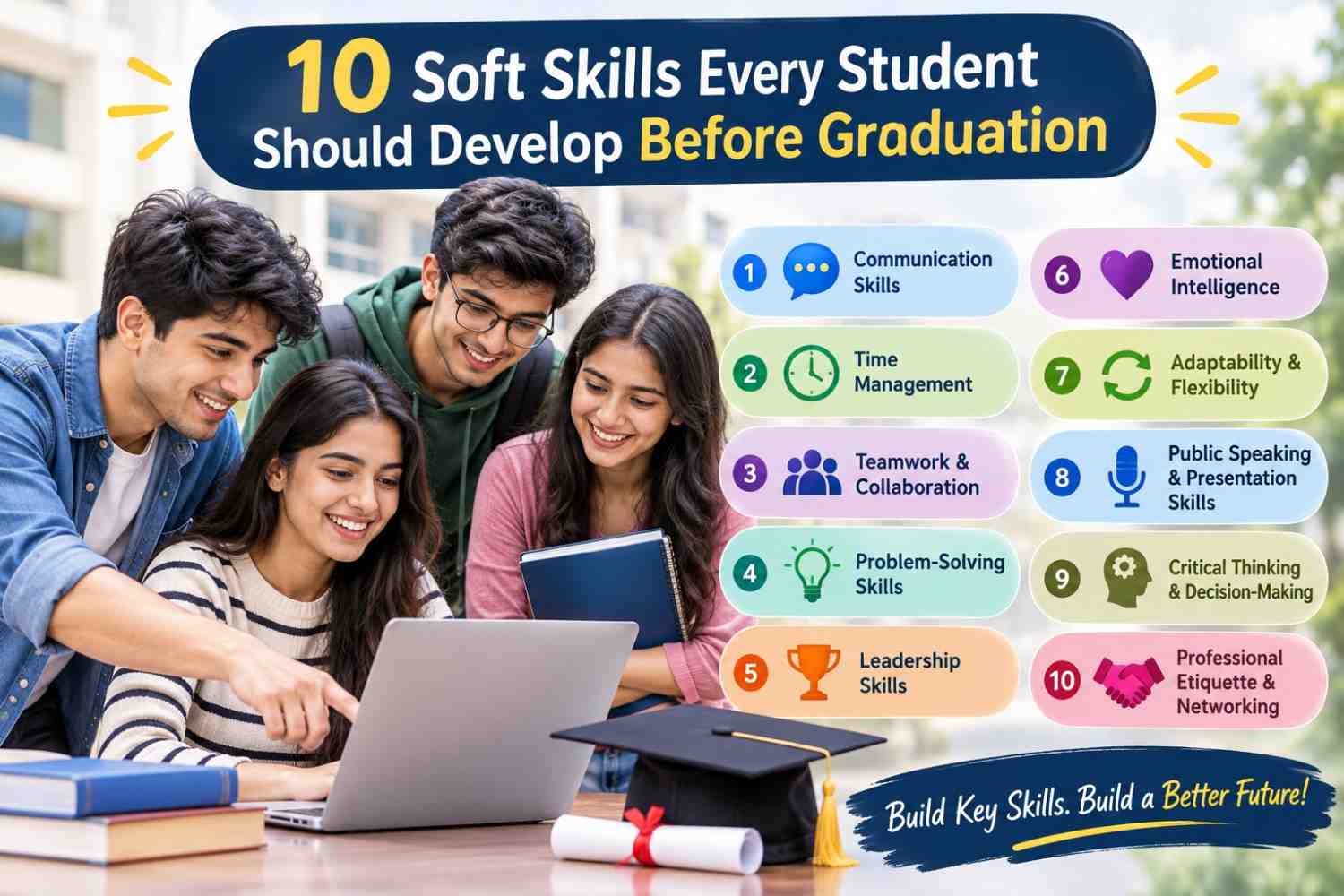
Let's explore ten essential soft skills every student should develop before completing graduation.
1. Communication Skills
Effective communication is one of the most important skills for academic and professional success. Whether you are participating in classroom discussions, attending interviews or working with colleagues, expressing your thoughts clearly makes a positive difference.
Students should focus on:
Speaking clearly and confidently.
Improving vocabulary and sentence formation.
Listening carefully before responding.
Expressing opinions respectfully.
Developing professional writing skills.
Regular English conversations and group discussions can improve communication abilities. Students who want structured guidance can explore an English Speaking Course in Dwarka to develop fluency and confidence.
2. Time Management
Managing time effectively helps students balance academic responsibilities, personal activities and career preparation. Poor time management often leads to unnecessary stress and incomplete tasks.
Here are some practical ways to improve this skill:
Prepare a daily study schedule.
Set realistic deadlines for assignments.
Prioritise important activities.
Avoid unnecessary distractions.
Break large tasks into smaller steps.
Learning to manage time during college can help students become more organised and responsible professionals.
3. Teamwork and Collaboration
Most professional environments require employees to work with others. Teamwork teaches students how to share responsibilities, respect different opinions and achieve common goals.
You can develop teamwork skills by participating in group projects, college events, sports activities and student organisations.
GlenEagles School For English encourages learners to participate in interactive activities that help improve collaboration and interpersonal communication.
4. Problem-Solving Skills
Every career involves challenges that require logical thinking and practical solutions. Students who develop problem-solving abilities can handle difficult situations more effectively.
To strengthen this skill:
Analyse problems before making decisions.
Consider different possible solutions.
Identify the advantages and disadvantages of each option.
Learn from previous mistakes.
Stay calm when facing unexpected situations.
Practising puzzles, case studies and real-life scenarios can improve critical thinking and decision-making abilities.
5. Leadership Skills
Leadership is not limited to managers or business owners. Students can demonstrate leadership by taking responsibility, supporting classmates and managing group activities.
Important leadership qualities include:
Taking initiative.
Making responsible decisions.
Motivating others.
Accepting accountability.
Managing conflicts positively.
Participating in college clubs, organising events and leading group projects can help students build leadership confidence.
6. Emotional Intelligence
Emotional intelligence refers to the ability to understand and manage your own emotions while recognising the feelings of others. It plays an important role in building healthy personal and professional relationships.
Students can develop emotional intelligence by:
Understanding their emotional reactions.
Listening without interrupting.
Showing empathy towards others.
Accepting constructive feedback.
Managing stress and frustration.
GlenEagles School For English recognises that personal growth involves more than language proficiency. Developing emotional awareness also helps learners communicate more effectively.
7. Adaptability and Flexibility
The professional world is constantly changing. New technologies, workplace expectations and responsibilities require individuals to adapt quickly.
Students should develop the ability to learn new things, accept changes and remain open to different ideas.
Some useful habits include:
Trying new activities and learning opportunities.
Accepting constructive criticism.
Developing digital skills.
Staying positive during unexpected changes.
Learning from unfamiliar experiences.
Adaptable students are often better prepared to handle new responsibilities after graduation.
8. Public Speaking and Presentation Skills
Being able to present ideas confidently is valuable in college, interviews and professional meetings. However, many students experience nervousness when speaking in front of an audience.
You can improve presentation skills through regular practice:
Prepare your points before speaking.
Maintain appropriate eye contact.
Use clear and simple language.
Practise your body language.
Record your presentations and review them.
GlenEagles School For English encourages students to practise speaking regularly so they can become more comfortable expressing ideas in front of others.
9. Critical Thinking and Decision-Making
Critical thinking helps students evaluate information, question assumptions and make informed decisions. It is especially useful when handling academic assignments and workplace responsibilities.
To develop this skill, students should read different viewpoints, analyse information carefully and avoid making decisions without understanding the situation.
For example, before selecting a career path, compare your interests, strengths, available opportunities and long-term goals.
GlenEagles School For English believes that independent thinking and effective communication work together to support personal and professional development.
10. Professional Etiquette and Networking
Professional etiquette includes the behaviour, manners and communication habits expected in academic and workplace environments. Building good professional relationships can also help students discover career opportunities.
Follow these simple practices:
Be punctual and respectful.
Communicate politely.
Dress appropriately for professional occasions.
Maintain a positive attitude.
Build meaningful connections with teachers, classmates, and industry professionals.
Students preparing for international education or language proficiency examinations can also explore a Best PTE Coaching in Dwarka option or a PTE Academic Training Centre to strengthen their English language preparation.
How Can Students Develop Soft Skills Before Graduation?
Developing soft skills requires regular effort rather than overnight changes. Students can start with small activities and gradually improve their abilities.
Here are five practical habits to follow:
Participate in group discussions and classroom activities.
Read books, articles and newspapers regularly.
Practise speaking English with friends.
Take responsibility for college projects and events.
Ask for feedback and work on areas that need improvement.
At GlenEagles School For English, the focus on communication and practical learning can help students work towards becoming more confident and effective communicators.
Final Thoughts
Academic qualifications may help students enter the professional world, but soft skills help them grow and succeed in it. Communication, teamwork, leadership, adaptability and problem-solving are valuable abilities that every student should develop before graduation.
Start improving these skills during your college years instead of waiting until your first job interview. With consistent practice, the right guidance and a willingness to learn, you can become more confident and professionally prepared.
GlenEagles School For English encourages students to invest in communication and personal development because strong skills today can create better opportunities tomorrow.