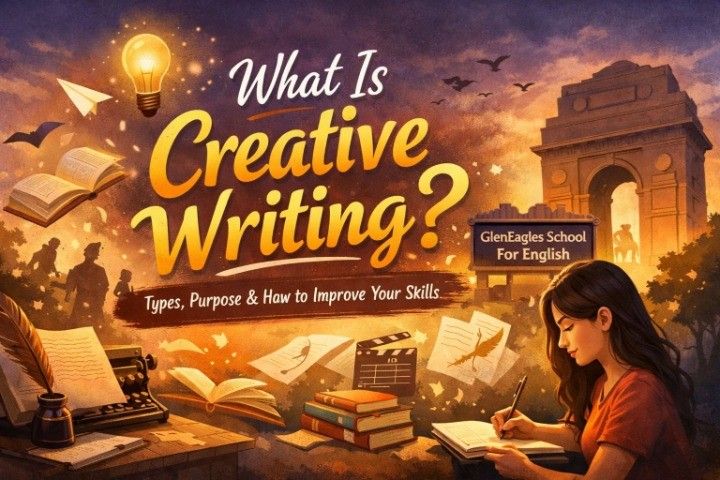
Creative writing gives words a heartbeat. It turns plain sentences into stories, emotions, and ideas that people remember. If you’ve ever wondered what is creative writing, or how you can master it, you’re in the right place.
Many learners today join a Creative Writing Course in West Delhi to sharpen their storytelling skills and improve language fluency. Institutes like GlenEagles School For English (you can find their location easily on Google My Business) offer structured programs that combine theory with practice. Alongside options such as a Spoken English Course and Personal Development Courses, creative writing training builds confidence that goes far beyond the classroom.
Let’s break everything down clearly and practically.
What Is Creative Writing?
So, what is creative writing exactly?
Creative writing refers to any form of writing that expresses thoughts, emotions, or stories in an imaginative way. It goes beyond academic, technical, or business writing. Instead of focusing only on facts, it focuses on narrative, style, character, and originality.
According to the National Council of Teachers of English (NCTE), creative writing encourages students to use imagination, explore language, and develop voice. Universities such as Oxford and Harvard also define it as writing that emphasizes narrative craft, character development, and literary techniques.
In simple terms:
Creative writing tells a story, shares a feeling, or paints a picture with words.
It includes fiction and non-fiction, poetry and prose, long novels and short flash pieces. The goal is not just to inform. The goal is to connect.
What Is the Main Purpose of Creative Writing?
Let’s answer a key question: what is the main purpose of creative writing?
The main purpose is expression. But that’s not the whole story.
Creative writing also aims to:
- Entertain readers
- Inspire thought or emotion
- Communicate experiences
- Build empathy
- Explore ideas in a deeper way
Research from the University of Cambridge highlights that narrative writing helps improve emotional intelligence and empathy. When writers create characters and conflicts, they learn to understand perspectives beyond their own.
Creative writing also strengthens communication. Employers value storytelling skills because strong narratives influence marketing, branding, leadership, and public speaking.
So yes, creative writing feels artistic. But it also serves practical purposes in education, business, and personal growth.
Types of Creative Writing
Understanding the types of creative writing helps you choose where to start.
- Fiction: Fiction includes novels, short stories, and flash fiction. Writers create imaginary characters and plots. Popular examples include literary fiction, science fiction, romance, and mystery.
- Poetry: Poetry uses rhythm, imagery, and structure to express ideas. It may follow strict forms like sonnets or use free verse. Poetry often focuses on emotions and symbolism.
- Creative Non-Fiction: This genre tells true stories using creative writing techniques. Memoirs, personal essays, and travel writing fall into this category.
- Scriptwriting: Scripts for films, television, and theatre also count as creative writing. Writers focus on dialogue, scenes, and visual storytelling.
- Children’s Literature: Stories written for children require clarity, imagination, and strong moral themes.
Each type uses similar core skills but applies them differently. Many students explore these formats during a Creative Writing Course in West Delhi, where trainers provide structured feedback and guided exercises.
Key Elements of Creative Writing
Every strong piece includes essential elements of creative writing.
Character: Characters drive the story. Readers connect with people, not just events.
Plot: The plot gives structure. It answers: What happens next?
Setting: Setting creates atmosphere. Time and place shape the story’s mood.
Conflict: Conflict creates tension. Without it, readers lose interest.
Theme: The theme delivers the deeper meaning behind the story.
When writers understand these elements, they produce stronger narratives. These foundations form the core of most professional writing programs, including those offered at GlenEagles School For English.
Creative Writing Techniques That Make Your Work Stand Out
Let’s talk about practical creative writing techniques.
Show, Don’t Tell: Instead of saying “She was nervous,” describe her tapping fingers and shaky breath.
Use Sensory Details: Engage sight, sound, smell, taste, and touch.
Strong Dialogue: Dialogue should sound natural. Real people don’t speak like textbooks.
Vary Sentence Structure: Short sentences create tension. Longer ones build flow.
Read Widely: Stephen King, in his book On Writing, emphasizes that good writers read regularly. Reading improves vocabulary and rhythm naturally.
These techniques transform average writing into memorable writing.
How to Write Creative Writing in English
Many learners specifically ask, how to write creative writing in English.
Here’s a clear roadmap:
- Build Vocabulary Gradually: Learn new words daily. Use them in context.
- Think in English: Try forming ideas directly in English instead of translating.
- Read English Literature: Start with short stories or modern fiction.
- Write Small Pieces First: Begin with 300–500-word stories.
- Get Feedback: Feedback accelerates improvement.
Students who combine creative writing practice with a Spoken English Course in West Delhi often gain fluency faster because they strengthen both written and spoken expression.
How to Write Creative Writing: Step-by-Step Guide
Now let’s answer the broader question: how to write creative writing effectively.
Step 1: Start With an Idea
Ask “What if?”
What if a stranger remembers your future?
Step 2: Create a Basic Outline
Sketch the beginning, middle, and end.
Step 3: Write Without Overthinking
First drafts should flow. Editing comes later.
Step 4: Edit Ruthlessly
Cut unnecessary words. Improve clarity.
Step 5: Read Aloud
If it sounds awkward, revise it.
This process keeps your work structured and readable. Even experienced writers follow similar systems.
How to Improve Creative Writing Skills
If you wonder how to improve your creative writing skills, focus on consistent habits.
Write Daily
Even 15 minutes helps.
Take Structured Training
A professional Creative Writing Course in West Delhi provides mentorship and assignments that build discipline.
Study Story Structure
Learn classic frameworks like the three-act structure.
Join Writing Communities
Constructive criticism improves quality.
Combine Writing With Personal Growth
Courses like Personal Development Courses in Delhi enhance confidence, which directly improves storytelling voice.
The importance of creative writing skills goes beyond publishing books. These skills improve presentations, marketing copy, and even interview performance.
Benefits of Creative Writing
Let’s explore the benefits of creative writing backed by research.
- Improves cognitive flexibility (American Psychological Association research supports expressive writing benefits).
- Enhances emotional processing.
- Strengthens communication skills.
- Boosts creativity across industries.
Creative writing also reduces stress. Studies published in the Journal of Expressive Writing show that structured expressive writing supports emotional well-being.
In simple words, writing helps you think better and feel better.
Not a bad deal for something that only requires a notebook.
Creative Writing Tips for Beginners
Starting feels intimidating. Every writer faces the blank page.
Here are practical creative writing tips for beginners:
- Don’t chase perfection in the first draft.
- Focus on one main idea per story.
- Avoid complex vocabulary just to sound smart.
- Edit in stages: structure first, grammar later.
- Celebrate small progress.
Remember, even famous authors started with messy drafts. The difference? They didn’t quit.
Why Professional Guidance Helps
Self-learning works, but guided learning accelerates growth.
At GlenEagles School For English, learners combine grammar, storytelling, and structured feedback. Many students find their institute easily through its Google My Business listing. Programs such as the Creative Writing Course in West Delhi integrate theory with real writing practice.
When students also enroll in a Spoken English Course in West Delhi, they strengthen their fluency. Pairing this with Personal Development Courses in Delhi builds communication confidence.
Writing improves when confidence improves. That’s logic, not magic.
Conclusion: Mastering Creative Writing with Confidence
So, what is creative writing?
It is the art of expressing ideas, emotions, and stories through imaginative language. It includes fiction, poetry, scripts, and creative non-fiction. The main purpose of creative writing centers on expression, connection, and impact.
If you want to learn how to write creative writing in English, start small, practice daily, and seek feedback. If you want to know how to improve your creative writing skills, combine consistent writing with professional guidance.
Creative writing does not demand perfection. It demands practice.
And once you begin, you may realize something surprising.
You don’t just write stories.
You discover your voice.