English proficiency has become an important part of academic, professional, and international opportunities. Students planning to study abroad, professionals seeking global career opportunities, and individuals preparing for immigration often need to demonstrate their ability to communicate effectively in English. Choosing the right training programme can provide structure and direction throughout this process. For learners preparing for the CELPIP examination, a CELPIP Coaching Institute in vikaspuri can help candidates understand the test format, practise essential skills, and develop a focused preparation routine.
However, success in an English proficiency examination is not based only on memorising vocabulary or grammar rules. Candidates need to develop practical skills in reading, listening, writing, and speaking. With regular practice, expert feedback, and a clear study plan, learners can gradually improve their performance and become more confident English communicators.
Understand Your English Proficiency Test
Before beginning preparation, it is important to understand the examination you are planning to take. Different English proficiency tests are designed for different purposes and may have different formats, scoring systems, question types, and assessment criteria.
For example, some tests are primarily associated with academic admissions, while others may be relevant to immigration, professional registration, or specific institutional requirements. Candidates should first determine which test is accepted for their intended university, organisation, immigration programme, or other purpose.
Once the examination is identified, study the official test structure carefully. Understand how much time is available for each section, what types of questions are asked, and how responses are evaluated. This knowledge allows you to prepare more efficiently instead of spending equal time on every aspect of English.
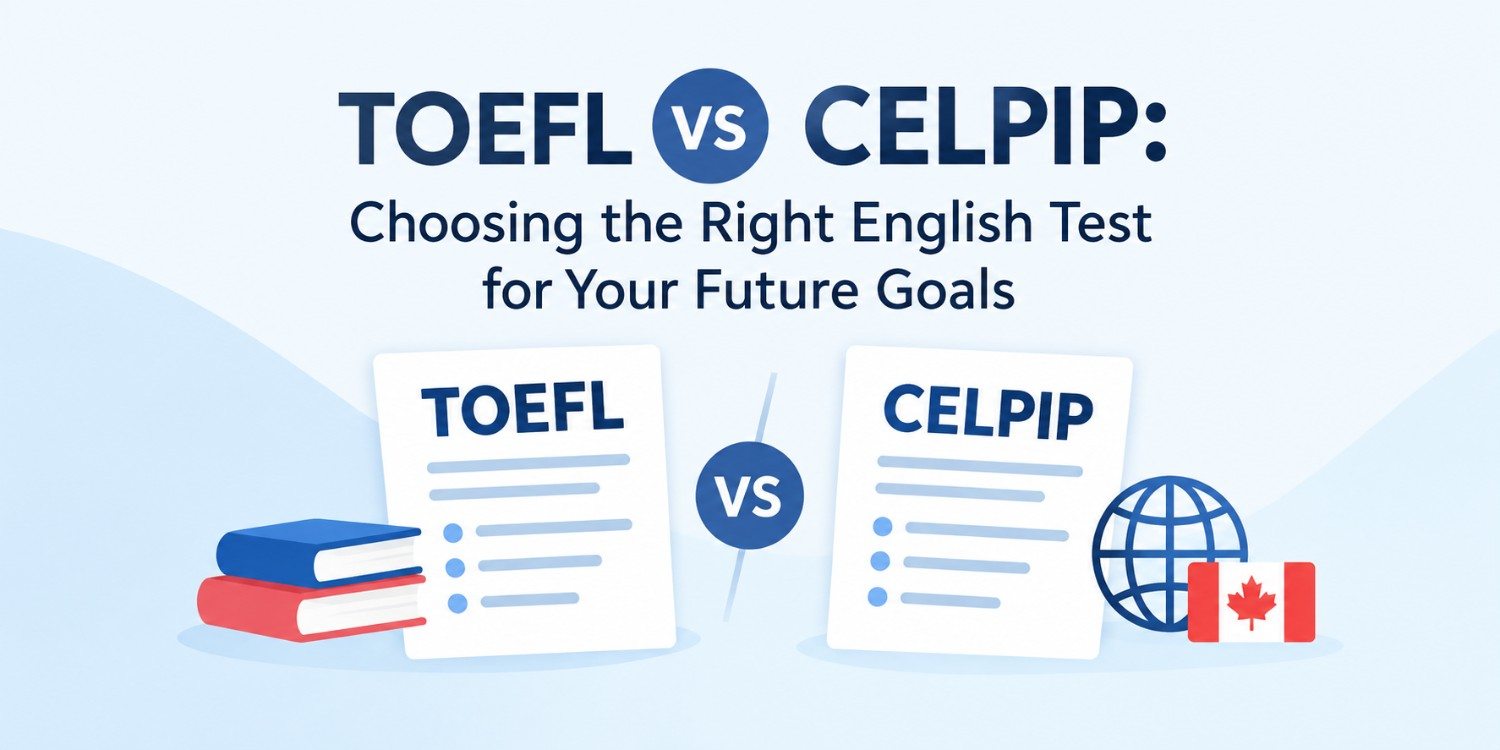
Also Read: TOEFL vs CELPIP: Choosing the Right English Test for Your Future Goals
Develop All Four Language Skills
A common mistake among learners is concentrating heavily on vocabulary and grammar while giving less attention to communication practice. Strong English proficiency requires a balanced approach.
Reading
Regular reading can improve vocabulary, comprehension, sentence structure, and the ability to identify key information quickly. Read newspapers, articles, essays, reports, and other reliable English-language material. Try to understand the main idea instead of translating every unfamiliar word.
Listening
Listening practice can help candidates become comfortable with different speaking speeds, accents, tones, and conversational styles. Listen to English podcasts, lectures, interviews, and educational videos. After listening, summarise the main points to check how well you understood the content.
Speaking
Speaking requires active practice. Reading grammar books alone cannot develop speaking confidence. Practise describing situations, expressing opinions, explaining ideas, and responding to questions within a limited time. Recording yourself can also help identify pronunciation, grammar, and fluency issues.
Writing
Writing practice should focus on clarity, organisation, grammar, vocabulary, and logical development. Instead of simply writing repeatedly, review your responses and identify recurring mistakes. Over time, this process can improve both accuracy and confidence.
Create a Structured Preparation Schedule
Once you understand the examination and your current proficiency level, create a realistic study schedule. A good plan should include both skill development and test-specific practice.
Start by identifying your stronger and weaker areas. If your reading performance is already consistent but speaking remains difficult, allocate additional practice time to speaking. Similarly, candidates struggling with listening should include regular listening exercises rather than relying only on full-length mock tests.
GlenEagles School For English encourages learners to approach preparation systematically. A structured routine can make it easier to track progress and maintain consistency over an extended preparation period.
Practise With Realistic Test Conditions
Knowing English is only one part of examination preparation. Candidates must also learn to perform within specific time limits.
Mock tests can help learners become familiar with examination pressure. During practice sessions, follow the actual timing as closely as possible. Avoid unnecessary interruptions and complete each section according to the required format.
After every mock test, review your performance. Do not focus only on the final score. Analyse why mistakes occurred. You may discover that errors are caused by misunderstanding questions, running out of time, poor organisation, or difficulty recalling information quickly.
For candidates preparing for TOEFL, selecting a suitable training provider can also support this process. Learners researching a Best TOEFL Institute in vikaspuri should consider factors such as course structure, practice opportunities, trainer guidance, feedback, and preparation resources rather than choosing a programme based only on promotional claims.
Improve Your Vocabulary Naturally
Vocabulary is important for both examinations and everyday communication, but memorising long lists of isolated words is not always effective.
Instead, learn vocabulary in context. When you encounter a new word while reading an article or listening to a conversation, note its meaning, usage, related words, and example sentence. Try using it in your own speaking or writing soon afterwards.
It is also useful to learn common phrases and expressions. This can make communication sound more natural and help you express ideas more efficiently.
Learn From Your Mistakes
Consistent feedback can make a significant difference during language preparation. Many learners repeat the same errors because they move from one practice exercise to another without reviewing their mistakes.
Maintain a simple record of recurring problems. These may include grammatical errors, pronunciation difficulties, limited vocabulary, weak sentence organisation, or problems with understanding spoken English.
Review this record regularly. Once you know your common mistakes, you can create targeted exercises to address them.
At GlenEagles School For English, learners can work on their individual language requirements while preparing for their chosen English proficiency examination. Guided practice can help candidates understand which areas require additional attention and how to use their preparation time effectively.
Make English Part of Your Daily Routine
English improvement should not stop when a study session ends. Small daily activities can reinforce what you learn during formal training.
Read an English article every day, listen to English conversations, practise speaking with a partner, write short paragraphs, or describe your daily activities in English. These simple habits can gradually make English communication more comfortable.
The goal should be to develop language skills that remain useful after the examination. Strong English can support classroom participation, workplace communication, interviews, presentations, emails, and interactions in international environments.
Choose Training According to Your Goal
Every candidate has a different starting point and objective. Some may need an English proficiency score for university admission, while others may be preparing for immigration or professional opportunities. Therefore, preparation should be aligned with the specific examination and the candidate's current skill level.
Before joining a course, consider whether it provides sufficient practice across reading, listening, speaking, and writing. Look for opportunities to receive feedback and understand your progress through regular assessments.
GlenEagles School For English provides a structured environment where learners can focus on practical English development alongside examination preparation. With consistent effort and appropriate guidance, candidates can build the skills required to approach their language goals with greater confidence.
Prepare Today for Your Future Goals
English proficiency can play an important role in academic and professional development. Preparing effectively requires more than learning grammar or completing practice papers. Candidates need to understand their examination, develop all four language skills, practise under realistic conditions, review mistakes, and maintain regular exposure to English.
A clear preparation strategy can make the learning process more organised and productive. Whether your goal involves higher education, international employment, immigration, or stronger everyday communication, investing time in meaningful English practice can provide long-term benefits.
At GlenEagles School For English, learners can receive focused support while working towards their individual English proficiency goals. With regular practice, professional guidance, and a consistent learning routine, you can strengthen your communication skills and approach your next academic or professional opportunity with greater confidence.