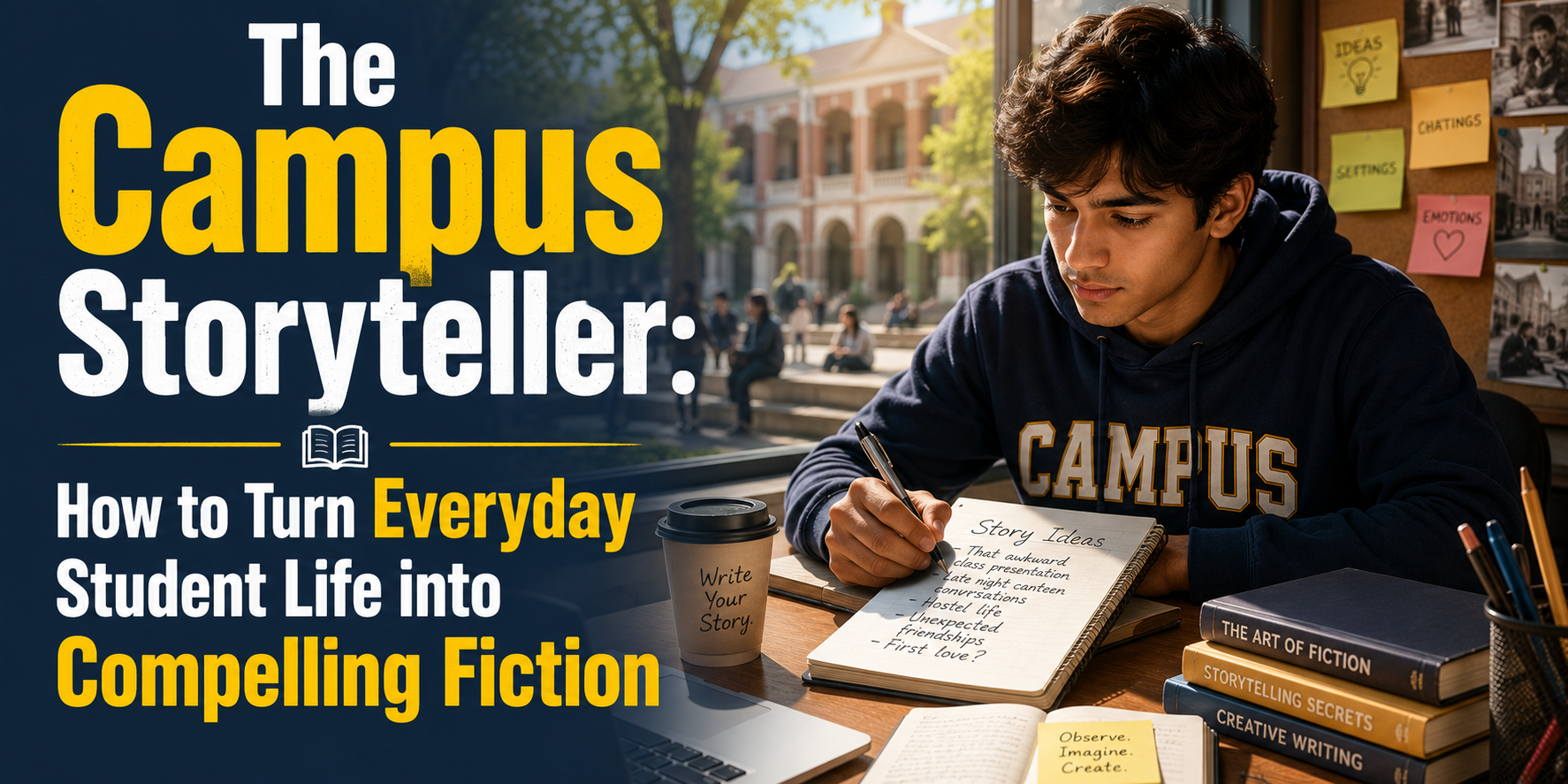
Every student carries a collection of stories. Some unfold in the classroom, others begin over a cup of tea in the cafeteria, and a few take shape during late-night study sessions in the library or lively conversations in the hostel. These ordinary moments often become the foundation of unforgettable fiction. If you want to become a Campus Storyteller, learning how to transform daily experiences into meaningful narratives is a skill worth developing. Many aspiring writers strengthen these skills through a creative writing course in West Delhi, where they learn how to shape real-life observations into engaging stories.
The best fiction does not rely on dramatic events alone. Instead, it captures emotions, relationships, and small moments that readers instantly recognize. Whether you dream of writing novels, short stories, or literary fiction, your own student experiences offer endless inspiration. This guide explains how to turn everyday campus storytelling into engaging fiction while keeping your stories authentic, relatable, and memorable.
Why Student Life Is a Goldmine for Fiction
Every university campus has its own rhythm. Students rush to lectures, celebrate festivals, worry about deadlines, and discover lifelong friendships. These experiences naturally create conflict, emotion, and character growth, the essential ingredients of compelling fiction.
Readers connect with stories that feel real. They may not have attended your college, but they understand the excitement of meeting new people, the pressure of assignments, the fear before exams, and the satisfaction of overcoming challenges. These shared emotions make college life fiction timeless.
Instead of searching for extraordinary plots, observe the everyday details around you. A conversation outside a lecture hall or an unexpected meeting with a professor can become the beginning of an unforgettable narrative.
Observe Before You Write
Every successful storyteller develops one important habit: careful observation.
Great stories often begin long before the first sentence appears on the page. Writers pay attention to people, conversations, expressions, and surroundings. They notice how classmates react during presentations, how friendships evolve over semesters, or how campus traditions bring students together.
When you observe your environment, you collect authentic material for campus narratives instead of relying on clichés.
Ask yourself questions like:
What makes this campus different?
Which traditions define student culture?
How do students handle success and failure?
What small moments reveal someone's personality?
These observations help create believable university characters and realistic campus-based fiction.
Build Characters Readers Can Believe
Strong stories begin with memorable characters.
Your protagonist does not need superpowers or extraordinary talents. They simply need believable goals, relatable flaws, and emotional depth. Many unforgettable coming-of-age stories feature ordinary students who gradually discover confidence, purpose, or identity.
Think beyond appearances. Consider questions such as:
What motivates your character?
Perhaps they want academic success, creative freedom, financial independence, or acceptance among peers.
What stands in their way?
Conflict creates momentum. Internal struggles, family expectations, academic pressure, or complicated student relationships can all drive the plot forward.
How do they change?
Readers remember transformation. Every meaningful student journey should leave the protagonist wiser, stronger, or more self-aware than before.
Character development matters more than dramatic twists because readers invest emotionally in believable people.
Let Your Campus Become a Living Setting
A strong setting does much more than describe buildings.
Your college campus should feel alive. Readers should hear the morning announcements, smell fresh coffee from the cafeteria, and experience the excitement of a campus festival.
Instead of writing:
"The library was big."
Write something like:
"The library stayed silent except for the soft turning of pages and the occasional whisper before another exam week."
Specific details create immersion.
Think about places students naturally gather:
The library during exam season
The hostel common room after midnight
Busy classroom corridors between lectures
The sports ground after practice
Quiet benches where friendships begin
Graduation day celebrations filled with mixed emotions
These familiar environments strengthen your college storytelling and make your fictional world believable.
Transform Real Experiences into Fiction
Many new writers worry that they lack original ideas. In reality, originality often comes from perspective rather than invention.
Start with real situations from your own academic life stories, then reshape them creatively.
For example:
A difficult group project becomes the foundation for an emotional friendship.
A misunderstanding with a professor develops into personal growth.
A campus event inspires an unexpected romance.
Missing an important deadline leads to an unforgettable adventure.
The goal is not to copy real events but to use them as inspiration for writing student fiction.
Changing names, settings, timelines, and motivations allows you to create original stories while preserving authentic emotions.
Dialogue Should Sound Like Real Conversations
Readers quickly notice unrealistic dialogue.
People rarely speak in perfect sentences. They pause, hesitate, joke, interrupt, and reveal personality through word choice.
Good dialogue should:
Move the plot forward.
Reveal character.
Create emotional tension.
Sounds natural without unnecessary filler.
For example:
"You're actually studying on festival day?"
"Someone has to pass tomorrow's exam."
"Or someone just enjoys making everyone else nervous."
This short exchange tells readers something about both characters without lengthy explanations.
Natural dialogue makes fictional campus stories feel authentic and enjoyable.
Every Story Needs Meaningful Conflict
Without conflict, there is no story.
Conflict does not always require villains or disasters. Everyday student life offers plenty of meaningful challenges.
Your protagonist might struggle with:
Academic expectations
Friendships that begin to change
Romance during stressful semesters
Financial limitations
Balancing ambition with personal happiness
Choosing between passion and practical career goals
These situations create emotional storytelling that readers recognize because they mirror real experiences.
Writing Techniques That Make Campus Fiction Stand Out
Every memorable story combines creativity with structure. Even the most exciting idea needs the right writing techniques to keep readers engaged from beginning to end.
Start with a clear narrative. Introduce your protagonist early, establish the setting, and give readers a reason to care about what happens next. Keep the plot moving by adding challenges that feel natural instead of forced.
At the same time, allow your characters room to breathe. Small conversations, meaningful observations, and emotional reactions often leave a stronger impression than dramatic twists.
When working on university fiction writing, focus on:
Showing emotions through actions instead of simply naming them.
Using sensory details to bring scenes to life.
Keeping each chapter connected to the main storyline.
Ending scenes with curiosity so readers want to continue.
These habits help transform simple campus novel ideas into engaging literary fiction.
Read More to Write Better
Every accomplished writer spends as much time reading as writing.
Explore different genres, study successful authors, and pay attention to how they build characters, dialogue, pacing, and conflict.
When you read thoughtfully, you begin to notice patterns:
How chapters begin and end.
How dialogue reveals personality.
How settings influence the mood.
How small conflicts grow into larger narratives.
These lessons naturally improve your own creative campus writing.
Edit Like a Professional Writer
Great fiction rarely appears in the first draft.
The editing process shapes good ideas into compelling stories.
As you revise your manuscript:
Remove unnecessary words.
Shorten long sentences where possible.
Check whether every scene moves the plot forward.
Make dialogue sound natural.
Ensure every character contributes to the story.
Read your work aloud to identify awkward phrasing.
Editing also improves readability, which benefits both readers and search engines when you publish your work online.
Remember, strong storytelling is not about writing more words. It is about choosing the right ones.
Final Thoughts: Start Your Journey as a Campus Storyteller
Every campus holds countless untold stories. The friendships, challenges, celebrations, classrooms, libraries, festivals, and late-night conversations all have the potential to become unforgettable fiction. You do not need extraordinary adventures to write meaningful stories. Careful observation, authentic emotions, and consistent practice can turn everyday moments into engaging narratives that resonate with readers.
If you want to strengthen your storytelling skills with expert guidance, GlenEagles School For English offers a professional learning environment where aspiring writers can refine their creativity, improve their writing techniques, and develop confidence through structured training.
Visit our Google Business Profile to learn more about our programmes, read student reviews, and explore how we support future writers. If you are ready to begin your creative writing journey, contact us today and take the first step toward becoming a confident campus storyteller.